In 2011, legendary venture capitalist Marc Andreessen famously penned an essay declaring that “software is eating the world.” He correctly predicted that every major industry—from retail to agriculture to finance—would eventually be run on software, transforming traditional companies into tech companies. Fast forward to 2026, and a new, even more profound paradigm shift has taken over the technology sector. Today, it is now undeniable that AI is “Eating” Software Development.
For decades, the fundamental bottleneck in the technology industry was the speed at which human beings could type, test, and deploy lines of code. Writing software was a highly manual, syntax-heavy, and error-prone endeavor. But the rapid maturation of Large Language Models (LLMs), multi-agent autonomous frameworks, and AI-native development environments has entirely flipped the script. Today, artificial intelligence does not just assist developers with autocomplete suggestions; it architects entire microservices, migrates legacy codebases, and autonomously resolves complex bugs in production.
For engineering managers, CTOs, and developers, this rapid transformation presents a massive problem: how do you stay relevant in an industry where the core mechanism of value creation—writing code—is being automated?
This comprehensive guide explores the mechanics behind this technological leap, the evolution of the programmer’s role, and the actionable steps you must take to thrive in the era of AI-driven software engineering.
Mastering The Era of Autonomous “Agentic” AI: The 2026 Enterprise Playbook
Table of Contents
The Core Drivers: Why AI is “Eating” Software Development
To understand the magnitude of this shift, we must look at why artificial intelligence is so uniquely suited to the task of software engineering. Unlike human languages, which are filled with nuance, emotion, and cultural context, programming languages are bound by strict logic, predictable patterns, and deterministic rules. This makes code the perfect playground for neural networks.
Here is why AI has aggressively taken over the software lifecycle in 2026:
1. The Eradication of Boilerplate Code
Historically, a software engineer spent roughly 30% to 40% of their time writing “boilerplate” code—repetitive, standard structures required to set up databases, API endpoints, and user authentication. AI models instantly generate these foundational layers flawlessly. A developer simply prompts an AI agent with, “Set up a Node.js backend using Express, connected to a PostgreSQL database, with JWT authentication,” and the entire scaffolding is generated, tested, and deployed in seconds.
2. Infinite Context Windows
In the early days of AI coding assistants, models could only “remember” a few hundred lines of code at a time. By 2026, models possess context windows capable of holding millions of tokens. This means an AI can ingest a company’s entire legacy enterprise codebase, understand the intricate dependencies between microservices, and refactor applications without breaking undocumented features.
3. Rapid Legacy Migration
One of the most expensive challenges for enterprise IT was migrating outdated systems (like mainframe COBOL or legacy Java) into modern cloud-native architectures (like Go or Rust). AI agents now act as universal translators, analyzing legacy logic and rewriting it in modern languages at a fraction of the time and cost of a human migration team.

The Rise of Autonomous Multi-Agent Systems
The biggest breakthrough leading up to 2026 wasn’t just smarter LLMs; it was the shift from reactive AI to agentic AI.
Early tools required developers to write code line-by-line, hitting “Tab” to accept AI suggestions. Today, development is driven by multi-agent systems. These are networks of specialized AI agents that collaborate, debate, and verify each other’s work to complete massive engineering tasks autonomously.
+-------------------------------------------------------------------------+
|                  THE MULTI-AGENT SOFTWARE PIPELINE                      |
|                                                                         |
|   [1. PRODUCT MANAGER AGENT]                                            |
|   - Reads user requirements (Jira tickets)                              |
|   - Translates business needs into technical system architectures       |
|                                                                         |
|   [2. LEAD DEVELOPER AGENT]                                             |
|   - Writes the application code based on the architecture               |
|   - Manages package dependencies and database schemas                   |
|                                                                         |
|   [3. QA & SECURITY AGENT]                                              |
|   - Autonomously attacks the code to find security vulnerabilities      |
|   - Writes unit tests and integration tests                             |
|   - Sends rejected code back to the Developer Agent for fixing          |
|                                                                         |
|   [4. DEVOPS AGENT]                                                     |
|   - Packages the verified code into Docker containers                   |
|   - Deploys safely to the cloud infrastructure                          |
+-------------------------------------------------------------------------+
When an enterprise utilizes a multi-agent framework, the human developer transitions from being a “typist” to acting as the “Director of Engineering” for a team of tireless, lightning-fast digital workers.
Interactive Developer ROI Calculator
The financial implications of integrating AI into the software development lifecycle are staggering. Use our interactive tool below to calculate the time and budget savings for an AI-augmented engineering team.
How the Human Developer Role is Shifting
Because AI is “Eating” Software Development, human engineers must pivot their skill sets entirely. The traditional entry-level junior developer role—where a human was paid to write simple functions, fix basic UI bugs, or write unit tests—has been almost entirely automated.
So, what does a human software engineer do in 2026?
1. From Coder to Systems Architect
Humans are no longer optimizing individual loops or writing SQL queries from scratch. Instead, they are focusing on high-level system design. The modern engineer’s job is to string together complex microservices, decide on data pipelines, and ensure that the architecture aligns perfectly with the company’s long-term business goals. They orchestrate how the AI should build the system, rather than building it themselves.
2. The Rise of “Prompt Engineering for Code”
Writing a vague prompt yields vague, buggy code. Developers must now master the art of highly specific, technical prompting. This involves providing the AI with the right context, defining the exact design patterns to use (e.g., MVC vs. microservices), and setting strict constraints on memory usage and latency requirements.
3. Hyper-Focus on Security and Compliance
While AI agents are incredibly fast, they can sometimes hallucinate logic or utilize outdated, vulnerable open-source libraries. The human developer’s role has heavily shifted toward QA (Quality Assurance) and cybersecurity. Engineers must act as the ultimate gatekeepers, reviewing the AI’s output to ensure it meets strict enterprise compliance standards (like SOC 2 or HIPAA) before it hits production.
4. Deep Domain Expertise
When syntax is free, domain knowledge becomes the most valuable currency. A developer who understands the deep mathematical complexities of fintech regulations, or the specific hardware constraints of aerospace engineering, is infinitely more valuable than a developer who simply knows how to write fast Python code. The AI handles the Python; the human handles the business logic.
5 Practical Ways to Future-Proof Your Tech Career
If you want to survive and thrive in this new landscape, you must aggressively adapt your workflow. Here are five actionable tips to secure your career in 2026:
1. Adopt AI-Native IDEs Immediately
If you are still writing code in a standard, un-augmented text editor, you are operating at a massive disadvantage. Transition immediately to AI-native IDEs like Cursor, GitHub Copilot Workspace, or Zed. These environments are built from the ground up to let AI navigate your entire file tree, refactor multiple files simultaneously, and debug runtime errors natively.
2. Practice Test-Driven Development (TDD)
AI thrives on clear boundaries. By adopting Test-Driven Development, you first write the tests that dictate how a feature should behave, and then you allow the AI agent to write the code to pass those tests. This ensures the AI’s output is mathematically verifiable and strictly aligned with your requirements.
3. Learn to Review Code Like a Senior Engineer
Your daily workflow will shift from writing code for 6 hours a day to reviewing AI-generated code for 6 hours a day. You must sharpen your ability to spot edge cases, race conditions, and memory leaks. Start contributing to open-source projects or reviewing complex pull requests to build this specific muscle.
4. Understand Vector Databases and RAG
To make an AI agent useful in a massive enterprise codebase, it needs to “search” that codebase effectively. Understanding how to build and maintain Retrieval-Augmented Generation (RAG) pipelines and how to utilize vector databases (like Pinecone or Milvus) is a critical skill for integrating AI into your company’s workflows.
5. Elevate Your Soft Skills
When technical implementation takes minutes instead of months, communication with stakeholders becomes the bottleneck. Engineers who can speak directly to marketing, sales, and executive teams, translate their business needs into technical prompts, and deliver working prototypes in the same day will become the most highly compensated professionals in the tech industry.
The Business Impact: Speed, Cost, and Security
For enterprise organizations, the shift toward autonomous AI development is altering the fundamental economics of running a tech company.
1. Faster Time to Market
Feature development cycles that previously took software teams three two-week sprints (six weeks total) are now being completed in three days. This hyper-acceleration allows businesses to react to consumer demands and market changes almost instantaneously.
2. Drastic Cost Red# AI is “Eating” Software Development: The 2026 Guide to the Future of Coding
Fifteen years ago, venture capitalist Marc Andreessen famously published an essay declaring that “software is eating the world.” He was absolutely right. Over the following decade, every major industry—from agriculture and manufacturing to finance and healthcare—transformed into a software business.
But fast forward to 2026, and a new, even more profound technological shift is unfolding right before our eyes. If you are an engineering manager struggling with endless backlogs, or a developer feeling overwhelmed by the sheer speed of innovation, you are experiencing this transition firsthand. The traditional methods of writing code line-by-line, spending hours hunting down missing semicolons, and manually drafting boilerplate are rapidly becoming obsolete.
Today, AI is “Eating” Software Development, and it is completely rewriting the fundamental rules of the tech industry. We have moved far beyond simple auto-complete extensions and basic syntax highlighters.
In the modern landscape, we are dealing with autonomous agents capable of scaffolding entire architectures, writing complex test suites, and deploying applications in a fraction of the time it once took a human team. This comprehensive guide will explore exactly how this transformation is happening, what it means for your career, and how you can position yourself to thrive in this new era.

The Historic Shift: From Software to AI
To understand where we are today, we must look at how the role of the developer has evolved over the past few decades. In the early 2000s, programming was a highly manual, memory-intensive discipline. Developers relied on thick textbooks and basic text editors to build software.
By the 2010s, the rise of Stack Overflow, open-source libraries, and advanced Integrated Development Environments (IDEs) made coding faster. Developers no longer had to reinvent the wheel; they could stitch together existing solutions to build applications. However, the core bottleneck remained the same: human typing speed and human cognitive load.
When we say that AI is “Eating” Software Development, we mean that artificial intelligence is now consuming the most repetitive, time-consuming layers of programming. With the release of massive language models boasting multi-million token context windows, AI can now ingest an enterprise’s entire codebase in seconds. It understands the business logic, the architectural patterns, and the styling guidelines natively.
We are no longer just instructing computers on how to do something; we are simply telling them what we want done. This shift from imperative programming to declarative, AI-driven development is the most significant leap in productivity since the invention of the compiler.
The New Software Development Life Cycle (SDLC)
The traditional Agile Software Development Life Cycle (SDLC) is undergoing a massive overhaul. The linear phases of planning, designing, building, testing, and deploying are collapsing into a much tighter, continuous loop powered by artificial intelligence.
In the past, gathering requirements and translating them into technical documentation could take weeks. Today, product managers can feed raw user feedback, voice memos, or rough wireframes directly into AI product management tools. The AI instantly generates comprehensive Jira tickets, detailed user stories, and strict acceptance criteria.
Once the requirements are set, the architecture phase begins. Instead of spending days drawing boxes and arrows on a whiteboard, senior engineers use AI to simulate various microservice architectures. The AI can instantly predict how a specific database choice will perform under load, or highlight potential security vulnerabilities in a proposed API structure before a single line of code is written.
Automated Code Generation and Autonomous QA
The actual coding phase is where the transformation is most visible. Modern AI coding assistants do not just suggest the next line of code; they generate entire modules, complete with error handling and logging. Developers now act more like editors or directors, guiding the AI and refining its output to ensure it perfectly matches the architectural vision.
Quality Assurance (QA) and testing have also been completely revolutionized. Historically, writing unit tests and integration tests was a tedious chore that many teams skipped to meet deadlines. Today, autonomous QA agents continuously run in the background.
These AI agents write thousands of edge-case tests, proactively bombard the codebase with simulated traffic, and automatically patch memory leaks. If a bug is detected during deployment, the AI can often write the fix, pass it through the CI/CD pipeline, and roll back the problematic build—all without human intervention.
Will Programmers Lose Their Jobs in 2026?
This is the most common question in the industry today. With AI taking over the heavy lifting of code generation, many junior and mid-level developers fear that their skills are becoming redundant. However, the reality is much more nuanced and ultimately optimistic.
Historically, every tool that made software development easier did not reduce the number of developers; it increased the demand for software. This is known in economics as the Jevons Paradox: as technological progress increases the efficiency with which a resource is used, the rate of consumption of that resource rises due to increasing demand.
Because software is now cheaper and faster to produce, companies are building more of it. They are tackling massive, ambitious projects that were previously considered too expensive or complex. The demand for digital solutions is infinite, which means the demand for people who can guide AI to build those solutions is higher than ever.
The role of the programmer is not disappearing; it is simply elevating. The engineers who will struggle are those who refuse to adapt—those who cling to the identity of being a “manual code typist.” The engineers who will thrive are those who embrace AI as a collaborative partner, using it to multiply their output by a factor of ten.
Actionable Tips: How to Adapt Your Career
If you want to remain highly competitive in this rapidly shifting landscape, you must consciously update your skill set. The tools and workflows that made you successful in 2022 will not be enough to sustain your career in 2026.
First, you must upgrade your tooling. If you are still using a standard text editor without a deeply integrated AI agent, you are essentially trying to win a Formula 1 race on a bicycle. Embrace AI-native environments that understand your entire repository contextually.
Second, you must become exceptionally good at “Context Engineering.” In the early days of AI, people focused on “prompt engineering”—the art of writing a clever sentence to get a good result. Today, Context Engineering is about knowing exactly which files, documentation, and database schemas to feed into the AI’s context window so it can write perfectly aligned code.
Shift Your Focus from Writer to Architect
The most critical change you can make is a shift in mindset. You must transition from being a writer of code to a reviewer and architect of systems.
Since AI can write the functions, your job is to read them critically. You need to develop a sharp eye for security vulnerabilities, edge-case logic flaws, and architectural anti-patterns that AI might occasionally introduce. Reading code, auditing systems, and understanding the broader business context are now far more valuable skills than remembering the exact syntax of a specific programming language.
The reality that AI is “Eating” Software Development shouldn’t spark fear; it should ignite excitement for what we can build next. By outsourcing the tedious syntax work to machines, developers finally have the mental bandwidth to focus on what actually matters: solving complex human problems, designing beautiful user experiences, and driving business value.
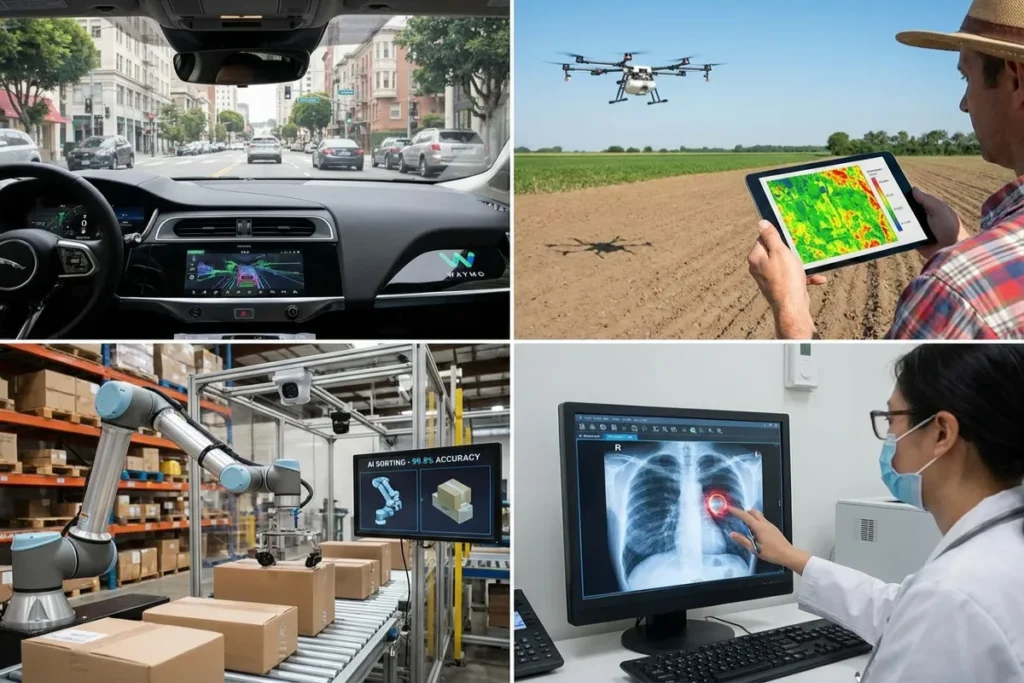
Practical Examples of AI in the Wild
To truly grasp the magnitude of this shift, let’s look at how AI is being applied in real-world scenarios in 2026.
Consider the common, dreaded task of legacy code migration. In the past, moving a massive, undocumented monolithic application from an outdated language to a modern microservices architecture could take a team of twenty engineers over two years. It was expensive, risky, and morale-draining.
Today, enterprise engineering teams deploy AI agents to handle this. The AI can map the legacy monolith, document its hidden dependencies, and systematically translate the logic into modern Python, Rust, or Go. What used to take two years and millions of dollars is now completed in a matter of months with a skeleton crew of senior reviewers.
Another clear example is the startup ecosystem. As AI is “Eating” Software Development, the barrier to entry for building complex digital products has never been lower. A solitary founder with deep domain expertise can now act as a “10x CEO,” using AI agents to build out a complete Minimum Viable Product (MVP) in a weekend.
The AI handles the frontend styling, the backend database routing, and the API integrations. This allows the founder to focus entirely on talking to customers, refining the product-market fit, and designing the go-to-market strategy. The technical execution is no longer the bottleneck; the quality of the idea is what determines success.
Conclusion
We are standing at the edge of the most exciting frontier in the history of technology. The days of struggling through endless boilerplate, fighting with build configurations, and spending weeks tracking down simple syntax errors are rapidly fading into the past.
Artificial intelligence has fundamentally changed the economics, speed, and scale of software creation. By automating the repetitive layers of the Software Development Life Cycle, AI is empowering a new generation of developers to act as high-level architects and systems thinkers. While the transition may feel daunting, the opportunities for those who adapt are limitless.
Embrace the AI tools available to you, focus on deepening your architectural knowledge, and continuously refine your ability to read and audit code. The future belongs to those who learn to collaborate seamlessly with artificial intelligence.
Ready to future-proof your tech career? Visit thetekworld.com for the latest AI coding tutorials, tool reviews, and strategies to stay ahead in the 2026 tech landscape!
FAQs
1. Will AI replace software engineers completely by 2030?
No. While AI will automate the actual typing of code, it cannot replace the critical thinking required to design systems, understand complex business requirements, and ensure software meets human needs. Engineers who use AI will replace those who refuse to adapt, but the human element remains vital.
2. What programming languages should I learn in 2026?
While traditional languages like Python, Rust, and TypeScript remain foundational for reading and auditing AI output, the most important language to master today is clear, structured human communication. Being able to articulate logic precisely to an AI agent is the new programming.
3. Is AI-generated code secure?
AI models have improved drastically, but they are not infallible. They can occasionally hallucinate outdated library dependencies or introduce subtle logical vulnerabilities. This is why the developer’s role has shifted heavily toward security auditing, code review, and architectural oversight.
4. How does AI impact technical debt?
It acts as a double-edged sword. On one hand, AI can quickly scan and refactor messy legacy code, drastically reducing existing technical debt. On the other hand, if a developer carelessly accepts AI-generated code without reviewing its architecture, they can generate massive amounts of “spaghetti code” at an unprecedented speed.

Comments