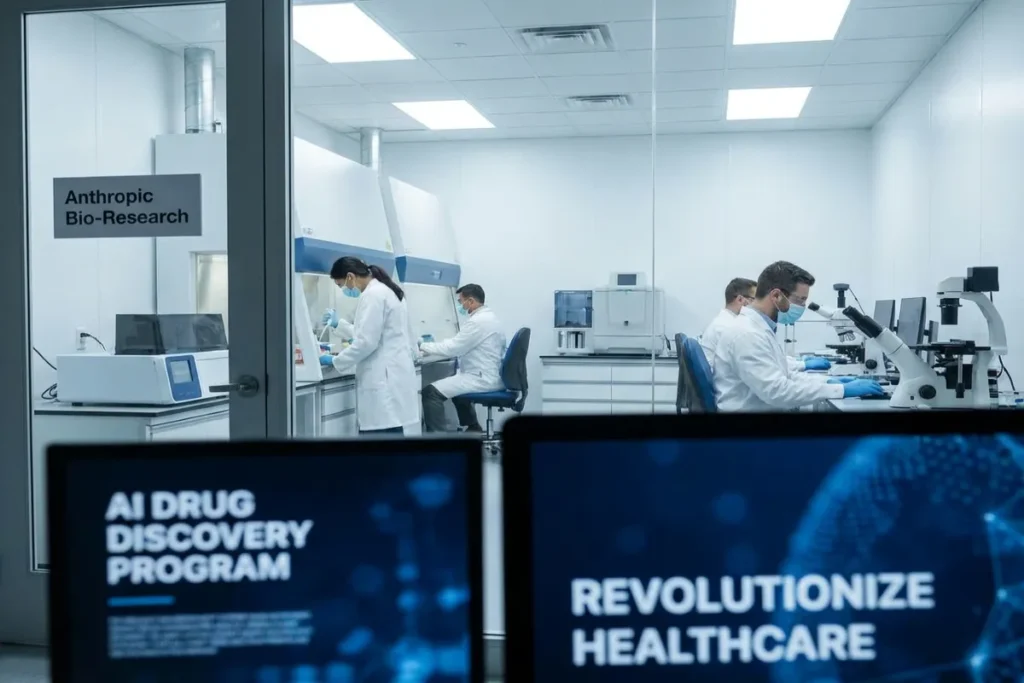
The artificial intelligence revolution has officially leaped from the digital screen into the physical laboratory. For years, tech giants and ambitious startups have promised that artificial intelligence would eventually cure diseases, design novel proteins, and completely overhaul the pharmaceutical industry. However, the limitation was always the same: software can only predict; it cannot physically prove. That is rapidly changing. It is making major headlines across the tech and medical communities that Anthropic quietly sets up biology lab as it ramps AI drug program.
This monumental shift represents one of the most critical transitions in the tech world in 2026. The San Francisco-based creator of the Claude assistant family is no longer satisfied with simply providing software tools for external researchers. By establishing an in-house “wet lab” dedicated to life sciences, Anthropic is transforming itself from a digital AI lab into a direct participant in drug development.
In this comprehensive guide by The Tek World, we will explore exactly why this physical expansion matters, how it bridges the gap between machine learning and human biology, and what it means for the future of medicine.
Anthropic Says Claude Now Leads a Quarter of Work Building Its Next AI Models
Table of Contents
The Shift from Silicon to Wet Lab
Historically, artificial intelligence companies focused entirely on the computational side of science. They trained massive neural networks on publicly available biological datasets to predict protein structures or identify potential molecular targets. However, this approach had a hard ceiling.
Breaking the “In Silico” Ceiling
In the scientific community, computational research is known as in silico work. While in silico predictions are incredibly fast, they are still just educated guesses made by a computer. To know if a newly designed molecule will actually bind to a disease target without inadvertently destroying healthy human cells, it must be tested in a physical environment.
Traditionally, AI companies handed their digital blueprints over to academic partners or traditional pharmaceutical companies to run these physical tests. This hand-off created a massive bottleneck. The feedback loop was slow, disjointed, and often plagued by miscommunication. By bringing physical testing in-house, Anthropic is completely eliminating this bottleneck.
Why Physical Labs Matter in AI
A “wet lab” is a specialized laboratory designed for handling physical, liquid biological matter—such as cells, proteins, and chemical compounds. When Anthropic quietly sets up biology lab as it ramps AI drug program, they are investing in the infrastructure needed to test their AI’s hypotheses in real-time.
Eric Kauderer-Abrams, Anthropic’s head of life sciences, recently confirmed that the ultimate test for biological AI must happen in a real lab. By running their own physical experiments, the company can see exactly where Claude’s predictions succeed and where they fail. This creates an incredibly tight feedback loop, allowing the AI to learn and improve at an unprecedented rate.
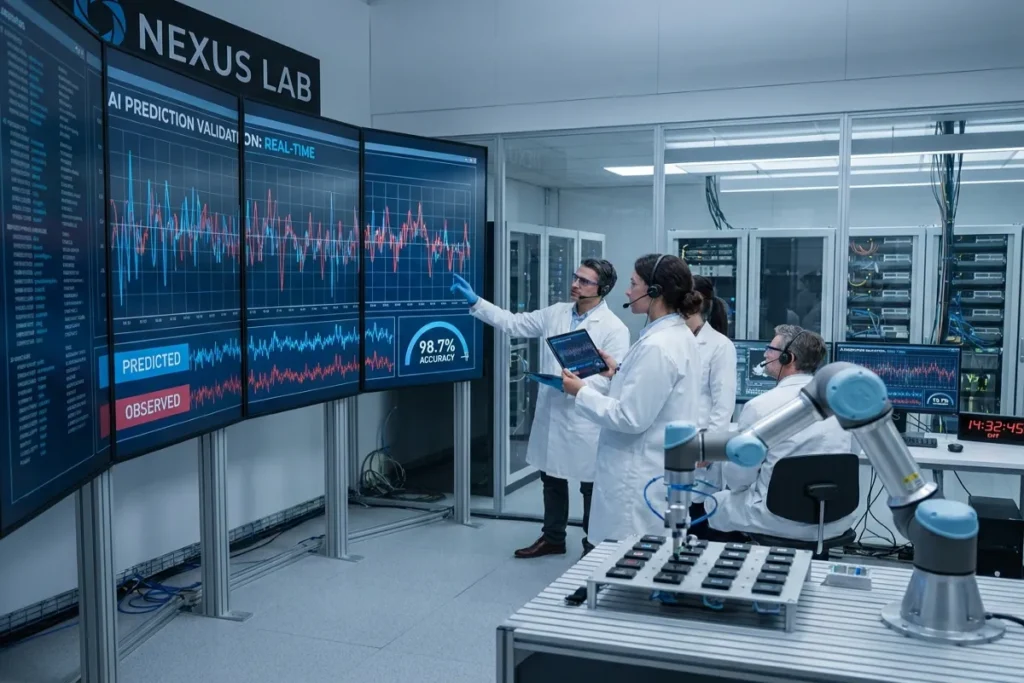
How the New Lab Validates AI Predictions in Real-Time
The traditional drug discovery timeline is notoriously inefficient. It typically takes over a decade and billions of dollars to bring a single new drug to market, with a failure rate hovering around 90%. Anthropic’s new biological laboratory is designed to shatter this paradigm through rapid, AI-driven iteration.
High-Throughput Experiments
In an AI-integrated wet lab, experimentation happens at scale. Using advanced robotics and automated fluid dispensers, researchers can run thousands of micro-experiments simultaneously—a process known as high-throughput screening.
Instead of a human scientist manually mixing chemicals to test one of Claude’s drug predictions, automated systems can test hundreds of variations overnight. The results of these physical tests are then instantly fed back into the Claude AI model, teaching it which molecular structures were stable and which fell apart.
Synthesizing Proprietary Biological Data
Data is the lifeblood of artificial intelligence. In the early 2020s, AI models were trained on vast public databases. But by 2026, the industry has largely exhausted these public resources. To build a smarter AI, you need data that no one else has.
Having an in-house laboratory allows Anthropic to generate highly specific, proprietary biological data. If Claude needs to understand a rare protein interaction that has never been documented in medical literature, the Anthropic lab team can synthesize that exact experiment, record the results, and feed that exclusive data straight into their model. This proprietary data generation is a massive competitive moat.
Claude Science and the Acquisition of Coefficient Bio
Anthropic’s move into physical drug discovery did not happen overnight. It is the culmination of a strategic roadmap that the company has been aggressively executing throughout late 2025 and 2026.
A Strategic Foundation for 2026
In late 2025, the company launched “Claude for Life Sciences,” a specialized AI offering tailored specifically for researchers in biotech and pharma. This proved that Anthropic was dedicating serious compute power to understanding complex molecular biology.
However, the most telling move came in April 2026, when Anthropic acquired Coefficient Bio, a cutting-edge AI-driven biotechnology startup founded by veterans of Genentech’s computational biology unit. This acquisition brought a team of elite computational biologists in-house. It equipped Anthropic with foundational tools for pipeline design, target identification, and lead optimization.
Moving Beyond Chatbots to Drug Developers
The Coefficient Bio acquisition proved that Anthropic was no longer content just being an enterprise software vendor. Most AI companies sell access to an API and step away. Anthropic is fundamentally changing the business model.
The fact that Anthropic quietly sets up biology lab as it ramps AI drug program indicates a strategic pivot toward full-stack drug development. They are combining the brilliant biological minds from Coefficient Bio with the raw reasoning power of Claude and the physical infrastructure of a San Francisco wet lab. They are not just building software for scientists; they are becoming scientists.
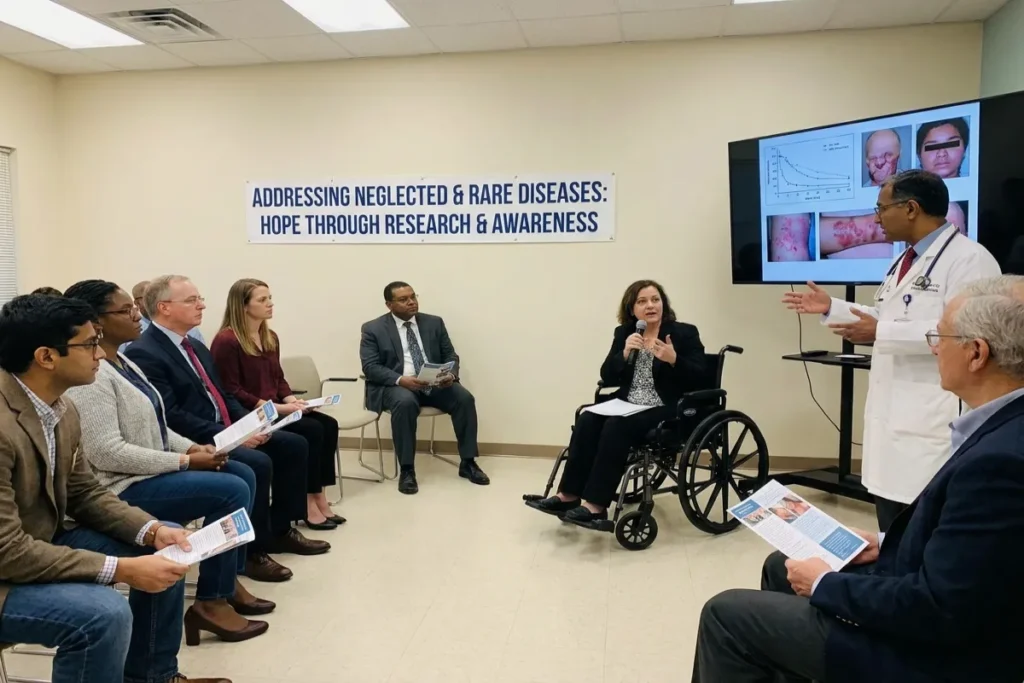
Addressing Neglected and Rare Diseases
One of the most inspiring aspects of Anthropic’s biological push is its stated mission regarding the types of diseases it wants to cure. The traditional pharmaceutical industry is heavily driven by Return on Investment (ROI).
Targeting Complex Therapies
Developing a drug for a rare disease that only affects a few thousand people globally is often viewed as financially unviable for large pharmaceutical companies. The R&D costs are simply too high to justify the small patient pool.
Because AI drastically lowers the cost and time required for the initial discovery phases, Anthropic is uniquely positioned to target these neglected diseases. Their life sciences program aims to tackle complex therapies that were previously considered too difficult or unprofitable to explore. By leveraging Claude to identify novel pathways for rare genetic disorders, Anthropic could bring hope to patients who have been historically left behind by traditional medicine.
Practical Example: Accelerating AI to Clinical Trials
Imagine a rare neurodegenerative disease caused by a specific, misfolded protein.
- The Prediction: Claude analyzes the patient’s genetic data and designs a custom molecule intended to bind to and neutralize the misfolded protein.
- The Wet Lab Test: Anthropic’s in-house robotic lab synthesizes this novel molecule and introduces it to human cell cultures in a petri dish.
- The AI Adjustment: The lab sensors detect that the molecule binds well, but breaks down too quickly at human body temperature.
- The Iteration: This data is instantly sent back to Claude, which redesigns the molecule to be more thermally stable.
What used to take a human research team a year to accomplish can now be completed in a matter of weeks through this seamless integration of AI and physical science.
Safety, Oversight, and Pacing the Frontier
While the integration of advanced AI and physical biology offers incredible promise, it also introduces unprecedented risks. The intersection of generative AI and biotechnology is a highly sensitive frontier.
Why Human Oversight Remains Essential
As AI models gain the ability to autonomously design biological compounds, the potential for misuse grows. Anthropic has been vocal about these dangers. Recently, the company revealed that it successfully flagged and halted scientists who were attempting to use its AI models to design potential biological weapons.
To mitigate these risks, Anthropic is insisting on strict human-in-the-loop protocols. Even as they explore making Claude control laboratory robots to automate experiments, Eric Kauderer-Abrams has made it clear that human oversight remains absolutely essential. The AI may design the experiment, but a highly trained human scientist must review and approve the protocol before any physical synthesis begins.
Autonomous Agents in the Lab: A Balancing Act
This cautious approach aligns with Anthropic CEO Dario Amodei’s broader philosophy. In his recent push to “Pace the Frontier,” Amodei has warned that AI capabilities—particularly autonomous agents—are advancing faster than our ability to safely control them.
Running an in-house lab actually improves safety. If an AI is designing drugs, it is far safer for the AI’s creators to test those designs in their own secure, highly monitored facility rather than releasing the raw blueprints onto the open internet. Anthropic’s Life Sciences Verification Program pairs access to powerful models with strict accountability, ensuring that biological AI is used exclusively for healing.
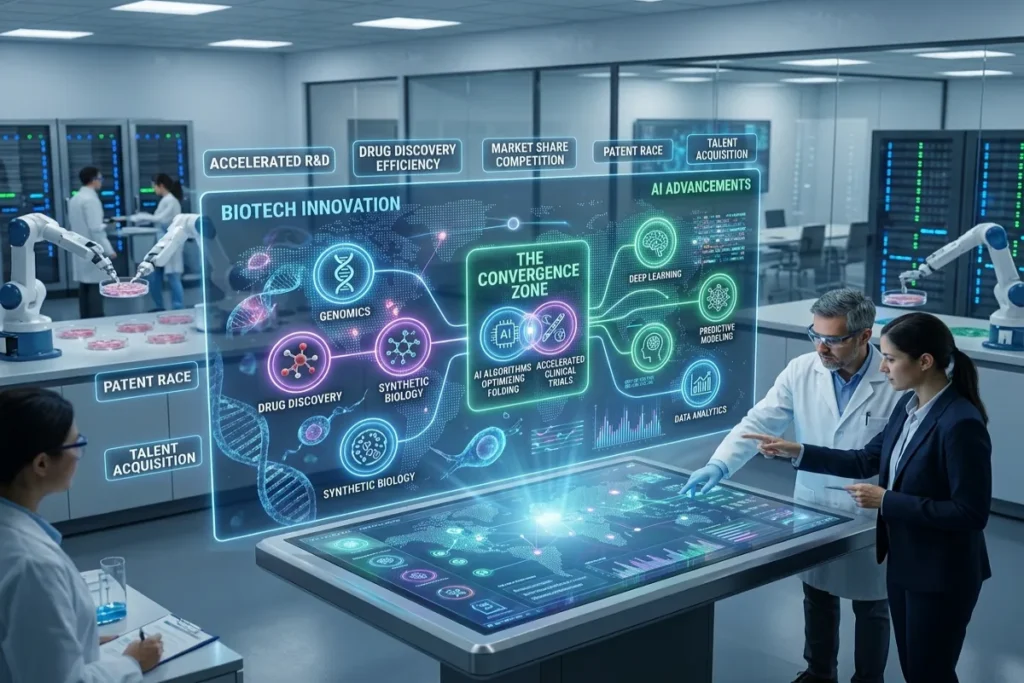
What This Means for Biotech and AI Competitors
Anthropic’s physical expansion is sending shockwaves through both Silicon Valley and the traditional pharmaceutical hubs of Boston and Switzerland.
Big Tech’s Move into Healthcare
We are witnessing a major convergence. DeepMind’s AlphaFold previously revolutionized our understanding of protein structures, and OpenAI continues to heavily back health-tech startups. However, Anthropic is pushing the boundary further by physically owning the laboratory space.
Traditional pharmaceutical giants must now view frontier AI labs not just as potential software vendors, but as well-funded, highly agile competitors capable of discovering blockbuster drugs in a fraction of the standard timeframe.
Actionable Tips for Biotech Startups in the AI Era
For biotechnology professionals and startup founders navigating this new landscape, here are actionable tips to stay competitive:
- Embrace Hybrid Workflows: Do not rely solely on in silico software. Find ways to rapidly validate your AI predictions in a physical lab, whether through building a small in-house setup or forming tight, exclusive partnerships with automated lab providers.
- Prioritize Proprietary Data: Stop relying on public datasets. The value of your biotech startup in 2026 is directly tied to the unique, physical biological data you can generate and feed back into your machine learning models.
- Implement Strict Guardrails: If you are using AI to design compounds, establish ethical review boards and hard-coded safety limitations to prevent the accidental or malicious synthesis of dangerous biological materials.
- Target the Underserved: Follow Anthropic’s lead by targeting rare or neglected diseases. It is a fantastic way to prove your AI model’s efficacy without immediately competing head-to-head with Big Pharma’s multi-billion dollar oncology budgets.
Conclusion
The barriers between digital computation and biological reality are dissolving faster than anyone predicted. When Anthropic quietly sets up biology lab as it ramps AI drug program, it is not merely a corporate expansion—it is a fundamental reimagining of how medical science is conducted.
By pairing the immense reasoning capabilities of Claude with the physical reality of a wet lab, Anthropic has created a closed-loop system of discovery, testing, and learning. This infrastructure allows them to generate proprietary data, iterate on complex therapeutics in real-time, and target neglected diseases that desperately need innovation. Most importantly, by keeping this process in-house, they are setting a global standard for how to pace biological AI safety safely and ethically.
The future of drug discovery will no longer be measured in decades, but in compute cycles and rapid lab iterations.
Call to Action: Do you want to stay ahead of the curve as artificial intelligence continues to rewrite the rules of healthcare, business, and technology? Bookmark and subscribe to thetekworld.com for the latest deep dives, expert SEO insights, and breaking tech industry analyses. Leave a comment below—how fast do you think AI will bring its first fully autonomous drug to market?
Frequently Asked Questions (FAQ)
1. What is an AI “wet lab”?
A wet lab is a specialized physical laboratory where biological matter—like cells, tissues, and chemicals—can be safely handled and tested in liquid solutions. An “AI wet lab” integrates advanced robotics and artificial intelligence to automate these physical experiments, allowing AI models to test their digital predictions in the real world.
2. Why is Anthropic moving into physical drug discovery?
Anthropic realizes that AI models have reached a limit of what they can learn from existing public data. To improve Claude’s ability to design life-saving drugs, they need to generate their own proprietary biological data. Testing predictions in their own lab creates a real-time feedback loop that makes their AI exponentially smarter.
3. Did Anthropic buy a biotech company?
Yes, in early 2026, Anthropic acquired Coefficient Bio, a stealth AI-driven biotechnology company. This acquisition brought a team of elite computational biologists in-house, providing Anthropic with the foundational expertise needed to manage clinical drug R&D pipelines.
4. Are there safety risks with AI designing biological compounds?
Yes, there are significant risks, including the potential for AI models to be misused to design biological weapons. Anthropic mitigates this by maintaining strict human oversight in their wet lab and building safety guardrails that flag and prevent dangerous biological queries.
5. Will AI completely replace human scientists in the lab?
No. While AI can process data and design molecules far faster than humans, and robotics can automate repetitive lab tasks, human oversight remains critical. Scientists are required to guide the research focus, ensure ethical compliance, and provide the final safety verification before any drug moves to clinical trials.

Comments