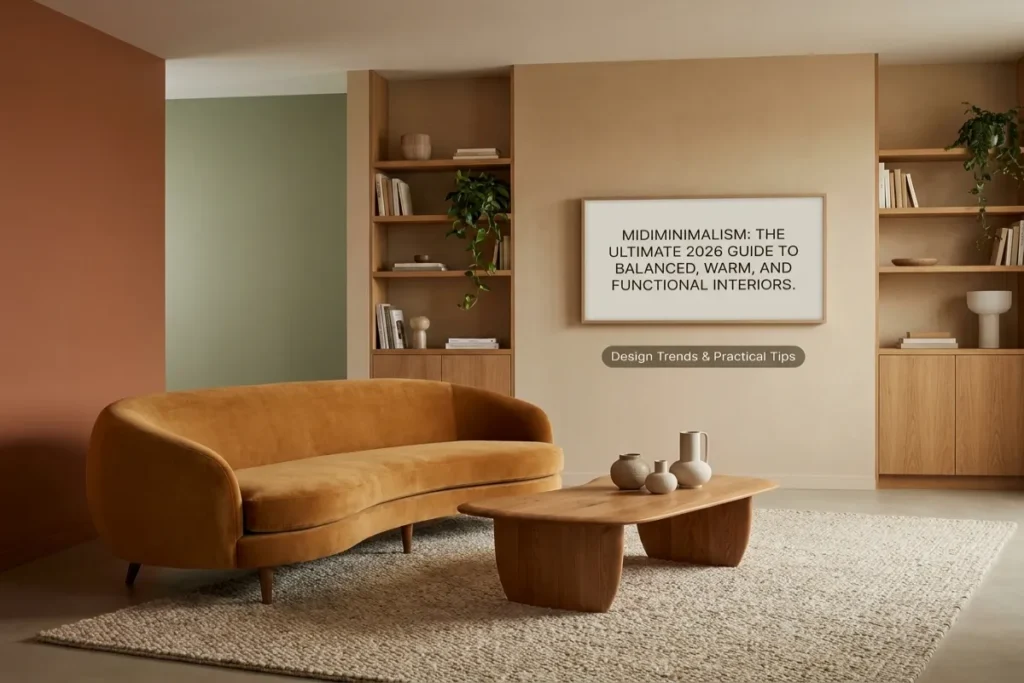
For years, home design felt trapped between two rigid extremes. On one side stood stark minimalism—an aesthetic of sterile white walls, empty surfaces, and cold industrial lines that often felt more like an operating room than a comfortable home. On the other side was maximalism—a hyper-saturated style of dense gallery walls, piled knick-knacks, and overwhelming sensory input.
In 2026, homeowners and interior designers have overwhelmingly embraced the sweet spot in between: Midiminimalism.
This emerging design philosophy abandons the restrictive perfectionism of extreme minimalism while rejecting the chaotic visual noise of maximalism. By focusing on intentional curation, layered warmth, functional storage, and personal character, adopting a Midiminimalism framework allows you to create a home that feels organized yet deeply lived-in and welcoming. This guide breaks down the core principles, material selections, room layouts, and practical steps needed to bring balanced harmony into your living environment.
Seamless Tech Disappearance: The 2026 Guide to Invisible Home Environments
Table of Contents
What is Midiminimalism? The Golden Middle of Modern Design
The core premise of this lifestyle trend is simple: keep what brings genuine utility and warm emotional value, while shedding unnecessary excess. It acknowledges that real life involves books, warm blankets, art collections, and technological devices—items that cold minimalism often forces you to hide away.
+-------------------------------------------------------------------------+
|                  THE INTERIOR DESIGN SPECTRUM Matrix                    |
|                                                                         |
|   STARK MINIMALISM:                                                     |
|   - Extreme elimination, empty cold surfaces, zero personality         |
|   - Visual rigidity, high psychological pressure to maintain order      |
|   - Feels clinical, uninviting, and rigid                                |
|                                                                         |
|   MIDIMINIMALISM (THE 2026 SWEET SPOT):                                 |
|   - Intentional curation, warm natural textures, balanced surfaces      |
|   - High functional utility paired with personal, character-rich art    |
|   - Feels inviting, easy to maintain, and psychologically calming        |
|                                                                         |
|   EXTREME MAXIMALISM:                                                   |
|   - Dense object layering, heavy visual clutter, loud patterns          |
|   - Elevated sensory overload, dust-collecting excess surfaces          |
|   - Feels chaotic, loud, and visually overwhelming                       |
+-------------------------------------------------------------------------+
The Psychology of Visual Balance
Living in a sterile environment starves our brains of tactile texture and personal connection. Conversely, living among constant clutter creates visual friction that taxes our working memory and elevates stress levels.
By practicing Midiminimalism, you provide your mind with structured visual order while introducing enough natural warmth, color, and personal history to make your home feel genuinely restorative.
Core Pillars of the Midiminimalist Aesthetic
Creating a balanced space requires adhering to several foundational principles that govern furniture selection, color palettes, and surface styling.
+-------------------------------------------------------------------------+
|                    THE 4 PILLARS OF MIDIMINIMALISM                      |
|                                                                         |
|   [1. INTENTIONAL LAYER]       [2. WARM NEUTRALS & TERRA]               |
|   - Curated personal items     - Rich earthy base tones                 |
|   - Texture over sheer volume  - Soft warm lighting layers              |
|                                                                         |
|   [3. CLOSED & OPEN STORAGE]   [4. QUALITATIVE LONGEVITY]               |
|   - Concealed hidden clutter   - Solid wood & tactile stone             |
|   - Curated open displays      - Craftsman-built furniture              |
+-------------------------------------------------------------------------+
1. Intentional Curation Over Total Elimination
Unlike classic minimalists who aim to reduce personal belongings down to the absolute bare minimum, midiminimalists curate deliberately. You don’t need to throw away your beloved ceramic mug collection or hide every book on your shelves; instead, you present them in thoughtful, well-spaced groups that give each object room to breathe.
2. Warm Organic Color Palettes
Cold stark whites and bluish grays are replaced by grounded organic tones: warm taupe, soft sand, rich terracotta, muted olive, and warm oat hues. These shades form a calm backdrop while absorbing ambient light gracefully.
3. Layered Textures Replace Visual Clutter
When you don’t clutter surfaces with dozens of small decorative objects, texture carries the visual weight of the room. Combine ribbed timber, bouclé upholstery, woven linen curtains, matte ceramics, and raw stone to build visual interest without creating clutter.
4. Hybrid Storage Solutions
The style balances concealed storage with open display. Frequently used electronic items, paperwork, and everyday odds-and-ends stay tucked behind sleek, handle-free cabinet doors, while open shelving is reserved for 3 to 5 high-meaning decorative pieces.
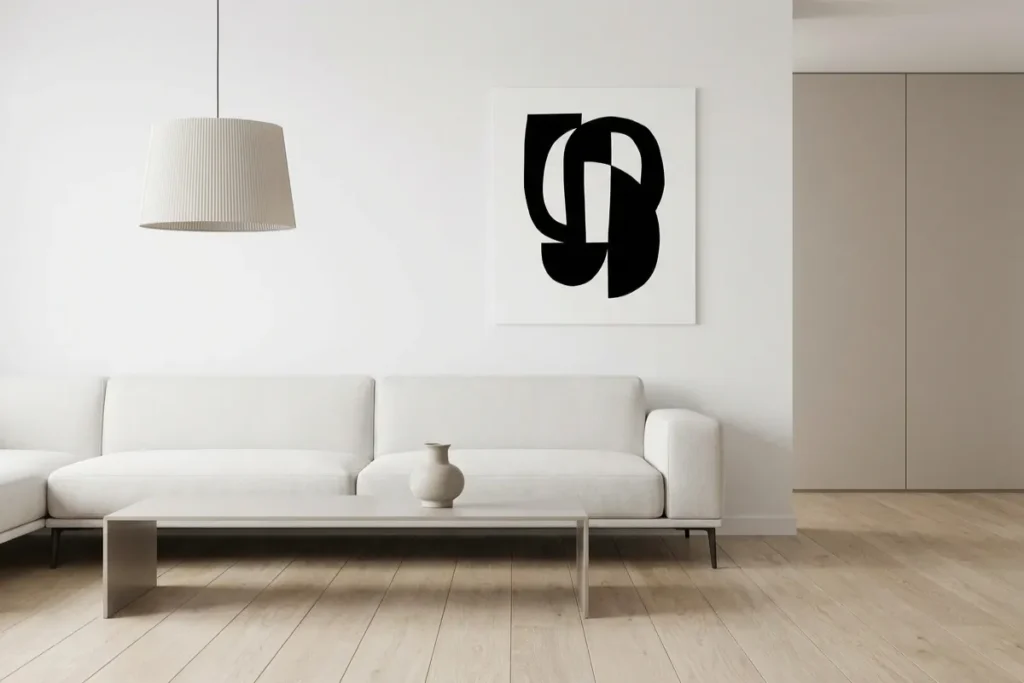
Interior Comparison: Stark vs. Midiminimalist vs. Maximalist
Understanding how different elements shift across design styles helps clarify how to balance your own space:
| Design Element | Stark Minimalism | Midiminimalism | Extreme Maximalism |
| Color Palette | Monochromatic white, grey, chrome | Warm beige, terracotta, sage, walnut | High-contrast jewel tones, loud prints |
| Wall Art | Single oversized canvas or bare wall | 2-3 framed art prints with clean spacing | Floor-to-ceiling dense gallery walls |
| Surface Styling | Completely bare tabletops | Groupings of 3 curated, functional items | Fully covered surfaces, stacked decor |
| Furniture Style | Ultra-sleek, sharp industrial edges | Softened rounded edges, warm solid woods | Ornate, heavily detailed, mixed eras |
| Textile Layers | Flat, smooth synthetic fabrics | Heavy linen, wool felt, bouclé, jute | Layered patterned rugs, velvet fringe |
Interactive Midiminimalist Design Assessment
Evaluate your current living space or home office and discover simple adjustments to hit the midiminimalist sweet spot using our interactive tool below.
Room-by-Room Implementation Guide
The Balanced Living Room
Focus on your primary seating area. Choose a comfortable sofa upholstered in a warm, textured fabric like wool or bouclé. Instead of crowding your coffee table with stacked magazine piles and trinkets, style it using the Rule of Three: place one low ceramic bowl, one small vase with natural dried branches, and a single hardcover book.
+-------------------------------------------------------------------------+
|                  COFFEE TABLE "RULE OF THREE" LAYOUT                    |
|                                                                         |
|                  [ LOW CERAMIC BOWL ]  (Utility & Keys)                 |
|                                                                         |
|   [ SINGLE HARDCOVER BOOK ]        [ VASE W/ DRIED BRANCHES ]           |
|   (Horizontal Anchor)              (Vertical Height Accent)             |
+-------------------------------------------------------------------------+
The Warm, High-Focus Home Office
Remote work demands an environment that supports focus without feeling sterile.
- Warm Timber Desk: Select a desk made from solid walnut or oak rather than white melamine.
- Concealed Cable Management: Route power cables through under-desk wire trays so the floor stays clean.
- Curated Wall Anchor: Hang two large, high-quality framed botanical prints or abstract art pieces behind your desk rather than creating a busy gallery wall.
The Restorative Sanctuary Bedroom
Keep the bed as the focal point. Layer a soft linen duvet with a muted wool throw blanket. Replace clutter-heavy nightstands with simple drawers that allow you to stow away personal items, reading glasses, and phone chargers before sleeping.
5 Practical Steps to Achieve Midiminimalism Today
Transitioning your space to this balanced design philosophy doesn’t require a complete renovation. Follow these five practical steps to transform your room:
- Clear Every Flat Surface First: Remove all items from your coffee table, desk, and counter surfaces. Wipe them down completely before putting anything back.
- Apply the 70/30 Storage Rule: Aim to keep 70% of your daily belongings tucked away inside closed drawers or cupboards, leaving only 30% of your best, most functional items on open display.
- Group Small Items into Trays: Prevent small desk or coffee table items from feeling chaotic by grouping them on a single wooden or leather tray to anchor them visually.
- Introduce Warm Wood & Organic Elements: Swap out cold chrome or plastic accents for warm timber bowls, linen lampshades, ceramic planters, and jute rugs.
- Edit Your Decor Seasonally: Rotate decorative objects in and out of storage every few months. This keeps your home feeling fresh and dynamic without adding new items to your space.
Elevate Your Lifestyle with The Tek World
Adopting Midiminimalism is more than an aesthetic interior trend; it is a mindful approach to modern living. By striking the perfect balance between cozy warmth, functional organization, and clean design, you create a space that nourishes your mind while making everyday living effortless.
Looking for expert reviews on warm organic furniture, smart home organization accessories, minimalist desk gear, and indoor lighting setups updated for 2026? Visit thetekworld.com for practical tutorials, buying guides, and inspiration designed to elevate your home!

Frequently Asked Questions (FAQ)
1. How does Midiminimalism differ from traditional Japandi or Scandinavian design?
While it shares similarities with Japandi and Scandinavian aesthetics—such as a love for natural woods and clean lines—midiminimalism is broader. It focuses specifically on finding the middle ground between minimalism and maximalism, allowing for more personal color, collected art, and comfortable everyday items than traditional minimalist sub-genres allow.
2. Can I achieve a midiminimalist look on a tight budget?
Yes! The style is built on intentional editing rather than buying expensive designer furniture. You can achieve the look by clearing excess clutter, painting walls in warm neutral tones, grouping existing accessories thoughtfully, and shopping secondhand for solid wood pieces.
3. How do I keep a midiminimalist home clean with kids or pets?
Rely heavily on stylish closed storage: use woven belly baskets, low wooden sideboard drawers, and ottoman storage benches. This allows toys, pet supplies, and games to be quickly cleared away at the end of the day, restoring calm to your main living areas.
4. What is the best way to choose artwork for a midiminimalist space?
Opt for medium to large-format art prints rather than clusters of small frames. Select pieces with generous negative space, subtle textures, or organic abstract shapes framed in simple warm wood frames to maintain visual calm.
